
With Tata Motors subsidiary taking over Ford's passenger vehicle (PV) manufacturing unit at Sanand in Gujarat, uncertainty over the future of Ford's Maraimalai Nagar unit in Tamil Nadu continues, with workers protesting on Thursday demanding a better severance package. There are over 2,000 employees working at the unit. On Thursday, there was a meeting between agitating employees and the state labour department. The workers started protests at the Chennai unit after Tata Passenger Electric Mobility signed a tripartite memorandum of understanding with Ford India and the Government of Gujarat for acquisition of Ford's PV manufacturing plant at Sanand.

Earlier in May, Ford India announced that it had dropped its plans to make electric vehicles (EVs) in India, which it intended to export, under the production-linked incentive scheme (PLI). Ford was among 20 companies that had signed a Champion OEM Incentive Scheme under the PLI project with the government in February this year. The decision comes as a blow for the 4,000-odd employees at Ford India's Maraimalai Nagar plant near Chennai and in Sanand, Gujarat. In September last year, the company had announced that it would exit the India market, which it had entered in 1995 through an on-again, off-again joint venture with Mahindra & Mahindra (they split in 1998, signed a JV in 2019 and split again in December 2020), retailing petrol and diesel brands such as the EcoSport, Figo, Aspire, and Endeavour.
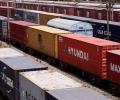
This alternative is being planned as the existing projects continue to be delayed due to land acquisition troubles. The ministry is thinking of adding new track lines to its existing eastern and western DFCs passing major areas in the proposed stretches, senior officials said.

Any adverse electoral fallout in Thrikkakara by-poll may have an impact on Rahul Gandhi because this falls in the state he represents as a member of Parliament and KC Venugopal because it is his home state, reports Shine Jacob.
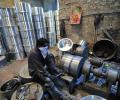
With the Covid-19 pandemic showing signs of ebbing and economic activity picking up, factory owners in Jalandhar had hoped that the worst was over. However, the heat wave in April and extensive power cuts that came with it, have crushed their hopes. The city's large number of micro, medium and small enterprises (MSMEs) are now gearing up for yet another struggle, this time to survive with the shortage of power that is severely impacting their operations.
American automaker Ford on Thursday said that it had withdrawn plans to manufacture electric vehicles (EVs) in India and it won't invest in the country under the performance-linked incentive (PLI) scheme. "After careful review, we have decided to no longer pursue EV manufacturing for exports from any of the Indian plants. "We remain grateful to the government for approving our proposal under the PLI and for being supportive while we continued our exploration. "Ford India's previously announced business restructuring continues as planned, including exploring other alternatives for our manufacturing facilities.
Old timers in Oil and Natural Gas Corporation (ONGC) still remember how in early 2000 its overseas subsidiary, ONGC Videsh Ltd (OVL), was on the verge of closure. Though OVL was set up in 1965, the only discovery the company had made till then was in Vietnam offshore, with more investment needed to monetise it. In 2001, when OVL started looking for new blocks abroad, the company's previous acquisition was 13 years old.

The Indian Railways has decided to not cancel any more passenger trains to accommodate more freight traffic for coal transport. It will also gradually restore the ones it cancelled recently. The national transporter is of the view that coal supply is now reaching normative levels and does not need any more special measures. "Early data suggests that coal supply has stepped up since the passenger trains were cancelled.
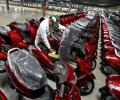
So far at least eight incidents of EV fires have been reported in just over a month's time.
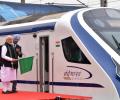
On August 15 last year, Prime Minister Narendra Modi announced from the ramparts of the Red Fort that the Indian Railways would launch 75 Vande Bharat Express trains by August 2023. Later, in her 2022 Budget speech, Finance Minister Nirmala Sitharaman announced that 400 Vande Bharat trains will be manufactured in the next three years, which are expected to cost between Rs 40,000 crore and Rs 50,000 crore. Those upbeat announcements come after a series of cancelled tenders, vigilance actions against officials and interdepartmental rivalry that delayed the addition of these iconic trains developed entirely indigenously by the Integral Coach Factory (ICF) in Chennai.

The Tamil Nadu government saw an increase in foreign direct investment by 41.5 per cent during the April-December period.

Ola Electric became the latest among electric scooter (e-scooter) makers to have started the exercise of recalling a specific batch of its model after a rap on the knuckles by the government. Union Minister of Road Transport & Highways Nitin Gadkari on Thursday advised electric vehicle (EV) companies to act responsibly by identifying and recalling defective batches without waiting for orders or guidelines from the ministry. The Bengaluru-based start-up is conducting pre-emptive diagnostics and health check on 1,441 scooters, it said in a statement on Sunday.
Hit by Covid waves and slowdown, the Indian Railways has still not been able to return to its pre-pandemic passenger traffic, data by ministry of Railways has revealed. In February, the national transporter received 413 million ticket bookings - 43 per cent higher than the previous year, but only 61 per cent of the 675 million in February 2020. According to the statistics, that was the last time the Railways saw more than 500 million bookings in a single month.
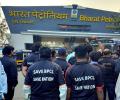
In December 2019, the India arm of Deloitte Touche Tohmatsu surprised many with its ultra-competitive bid to become the transaction advisor for the country's largest strategic divestment in Bharat Petroleum Corporation (BPCL). The multinational major quoted just Rs 1; the second-highest bidder, SBI Caps, reportedly quoted Rs 15-17 crore. For Deloitte, the motivation was to bag a prestigious deal adding a national energy company to its portfolio. No doubt, it expected BPCL to go to a marquee buyer in quick time.
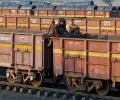
Amid rising demand for coal freight and an aggressive push towards diversifying its freight basket, Indian Railways is planning to buy 100,000 more wagons over the next three fiscal years. The procurement plan will majorly comprise BOXN wagons, which are used to transport coal, said a senior Ministry of Railways official. Notably, the railways recently floated a sizeable tender worth Rs 35,000 crore of wagons, which had been in the pipeline since 2018. "Our Budget Estimates for freight increase were conservative.
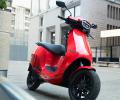
The government-appointed expert committee, which probes incidents of Ola Electric's S1 Pro and Okinawa vehicles catching fires, has added the latest case of fire involving PureEV electric scooter to its investigation, a senior government official told Business Standard. "A team comprising experts from Indian Institute of Science (IISC) and Centre for Fire, Explosive and Environment Safety (CFEES) are investigating the cases. "As soon as the report is submitted, we shall take appropriate action," said Giridhar Aramane, secretary at the ministry of road transport and highways.

Taking advantage of a Russian offer to sell its crude oil cheap and bear the cost of insurance and transportation, India may import as much as 2 million tonnes (mt), or roughly 15 million barrels of crude, from the sanctioned nation in 2022, Business Standard has learnt. This comes after reports that Indian Oil Corporation (IOC) bought 3 million barrels of Russian Urals from trader Vitol for May delivery. This will be on cost, insurance and freight (CIF) model, where the seller incurs the costs and pays the freight, including insurance charges.
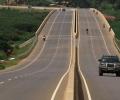
If 2019-20 (FY20) was an unusual year for highway construction in India, with the pace of work slowing down for the first time since the Narendra Modi government assumed power in 2014, largely due to the general elections in May and liquidity crunch, the outbreak of the Covid-19 pandemic in 2020-21 (FY21) only made matters worse with lockdowns and labour unavailability. The pace of highway construction in 2021-22 (FY22) has not been able to bulldoze the pandemic barriers in a year marred by two Covid-19 waves - the second at the start of the fiscal year, the third towards the close. With localised lockdowns and restrictions on mobility, highway construction growth in the country has now fallen to a five-year low.

The Centre's ambitious Rs 6-trillion National Monetisation Pipeline (NMP) could fall short of yearly targets for the current fiscal year (FY22) and the next one as well (FY23), partly due to the long gestation period in monetising big-ticket railway infrastructure, Business Standard has learnt from sources in the finance and rail ministries. Officials say the major chunk of railway monetisation will happen from FY24 onwards because leasing some of the infrastructure, like stadiums and dedicated freight corridor, will not happen anytime soon. Rail infra is expected to be the second-biggest contributor to the NMP, with about Rs 1.52 trillion worth of assets to be monetised.
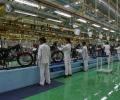
The $8.5 billion TVS Group received final approval for a family resettlement on February 4 from the National Company Law Tribunal (NCLT). It is an arrangement that is noteworthy because unlike many other corporate settlements this one was sorted out amicably and without any open conflicts.
 © 2026 Rediff.com - Advertise with us - Disclaimer - Privacy Policy - Sitemap - Feedback - About us - Terms of use - Grievances